

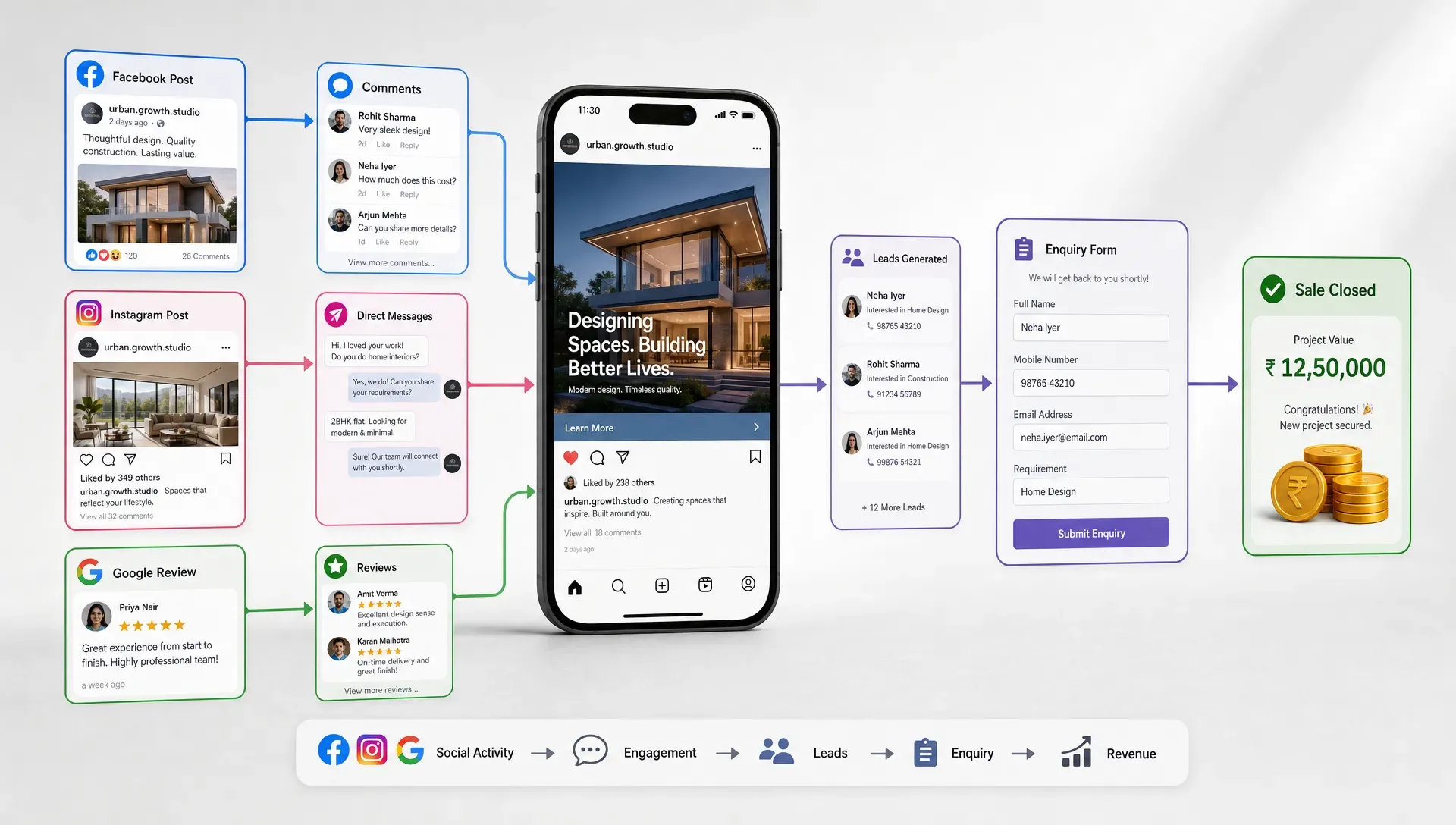
For a small or medium business, social media is no longer a side activity handled only when someone has spare time. Customers use Instagram, Facebook, LinkedIn, YouTube, WhatsApp and review platforms to discover brands, compare options, ask questions and decide whom to trust. If your business is visible but inconsistent, you may get attention without converting it into leads or sales.
That is where the right social media marketing agency services make a measurable difference. An agency should not simply post festival creatives or chase likes. It should help you build a repeatable system for visibility, engagement, lead generation, customer trust and revenue support.
According to DataReportal’s Digital 2024 India report, India had 462 million social media user identities in January 2024. For SMBs, that scale is both an opportunity and a challenge. Your customers are online, but so are your competitors, marketplaces, influencers and larger brands with bigger budgets.
Why SMBs Need a Structured Social Media Plan
Many SMBs start social media with good intentions: a few product photos, some offers, an occasional reel and a festival greeting. The problem is that social algorithms reward consistency, relevance and interaction. Customers also expect a brand to respond quickly, explain clearly and look credible before they make an enquiry.
A structured plan answers practical business questions. Which platforms matter most for your audience? What kind of content will create trust? What budget should go into paid promotion? How will enquiries be tracked? What happens when a negative review appears? Without answers, social media becomes a cost centre rather than a growth channel.
For an SMB, the goal is not to be active everywhere. The goal is to show up in the right places with the right message, then connect social activity with website visits, calls, store visits, WhatsApp conversations, demo bookings or purchases.
Core Social Media Marketing Agency Services Every SMB Should Expect
A capable agency should bring strategy, execution and measurement together. The exact mix will depend on your industry, budget and sales cycle, but the following services cover the essentials most SMBs need.
| Service | What it includes | Why it matters for SMBs |
|---|---|---|
| Social media audit | Review of profiles, content, competitors, engagement and gaps | Identifies what is working and what is wasting effort |
| Platform strategy | Channel selection, audience mapping and campaign direction | Prevents scattered posting across too many platforms |
| Content planning | Monthly calendar, themes, formats and campaign ideas | Keeps posting consistent and aligned with business goals |
| Creative production | Reels, carousels, graphics, captions, product content and ad creatives | Makes the brand look professional and easy to understand |
| Community management | Replies, comment monitoring, message handling and escalation | Builds trust and prevents missed enquiries |
| Paid social campaigns | Meta ads, LinkedIn ads, retargeting and lead campaigns | Helps reach buyers beyond existing followers |
| Reputation support | Review monitoring, complaint response guidance and sentiment tracking | Protects credibility in local and competitive markets |
| Reporting | Performance dashboards, insights and monthly recommendations | Shows what to improve, pause or scale |
| Conversion support | Landing page direction, lead forms, WhatsApp flows and CRM coordination | Turns attention into measurable business outcomes |
1. Social Media Audit and Competitor Review
Before creating new campaigns, an agency should study your current social presence. This includes profile quality, branding consistency, posting frequency, content formats, engagement rate, response quality and audience behaviour.
The audit should also compare your business with direct competitors. For example, a Chennai-based clinic, real estate consultant, coaching centre or restaurant may need to understand how local competitors present offers, use reels, collect reviews and respond to customer questions.
A useful audit gives clear recommendations rather than vague comments. It may reveal that your Instagram page has good product visuals but weak calls to action, your Facebook page has outdated information or your LinkedIn presence does not reflect your B2B credibility.
2. Platform Strategy Based on Your Buyer Journey
Not every SMB needs to invest equally in every platform. A B2B software provider may get better results from LinkedIn thought leadership and lead generation campaigns. A fashion boutique may benefit more from Instagram reels, influencer collaborations and social commerce. A local service business may need Facebook, Google Business Profile posts, WhatsApp and reputation management.
An agency should map platforms to the buyer journey. Awareness content may work well through reels and short videos. Trust-building content may come from testimonials, case studies, FAQs and founder-led posts. Conversion may require lead forms, retargeting ads, WhatsApp follow-ups or landing pages.
This is also where social media should connect with other acquisition channels. If you are comparing organic visibility and paid traffic, Gilead Digital’s guide on SEO vs SEM for online presence can help you understand how search and paid campaigns support each other.
3. Content Planning and Creative Production
Content is the most visible part of social media, but it should not be random. A strong agency builds a content calendar around your audience’s questions, objections, buying triggers and seasonal opportunities.
For SMBs, content usually needs a healthy mix of education, proof and promotion. Too much promotion feels pushy. Too much education without a next step may build awareness without leads. The right balance depends on the business.
Common content formats include:
- Short-form videos that explain a service, show a product or answer a common question
- Carousels that simplify complex topics or compare options
- Customer testimonials, reviews and before-after stories where appropriate
- Behind-the-scenes content that builds authenticity
- Offer posts tied to landing pages, WhatsApp or enquiry forms
- Founder or expert posts that build authority in B2B markets
For Indian SMBs, language and cultural context also matter. A single English post may not be enough if your customers are more comfortable in Tamil, Hindi, Telugu, Kannada or another regional language. A good agency will consider local language captions, regional references and platform habits instead of copying generic templates.
4. Community Management and Customer Response
Social media is not a one-way publishing channel. Customers may comment on prices, ask for availability, complain about delays, request directions, compare packages or ask for proof before trusting your business.
If these interactions are ignored, the business loses opportunities. If they are handled poorly, the brand may look unprofessional. Community management includes monitoring comments and direct messages, responding to common questions, identifying urgent issues and escalating sales-ready enquiries to the right person.
This service is especially important for local businesses, ecommerce stores, clinics, training institutes, real estate firms and hospitality brands. In these industries, a delayed reply can push a customer to a competitor.

5. Paid Social Advertising for Reach, Leads and Retargeting
Organic content is important, but organic reach alone is rarely enough for consistent growth. Paid social campaigns help SMBs reach specific audiences based on location, interests, behaviour, job profile or previous interaction with the brand.
An agency should plan paid campaigns around business goals rather than boosting posts casually. A restaurant may need location-based awareness and offer campaigns. A B2B consultant may need LinkedIn lead generation. A D2C brand may need product ads, abandoned cart retargeting and lookalike audiences.
Paid social campaigns usually need three layers. The first layer introduces your brand to relevant audiences. The second layer engages people who showed interest. The third layer retargets users who visited your website, interacted with your posts or added products to cart but did not complete the action.
Your agency should also monitor cost per lead, lead quality, conversion rate and return on ad spend where tracking is available. Low-cost leads are not useful if they never respond or cannot afford your product.
6. Social Commerce and Ecommerce Support
For ecommerce SMBs, social media often works closely with the store experience. Product discovery may happen on Instagram or Facebook, but the purchase may happen on a website, marketplace or WhatsApp.
An agency can support this journey through product-led creatives, catalogue promotions, retargeting, influencer content, customer reviews and landing page coordination. For Shopify businesses in particular, social media should not be isolated from SEO, paid search, email and conversion optimisation. Gilead Digital has a dedicated article on why a Shopify store may need professional digital marketing services if you want to explore that broader ecommerce angle.
The key is to reduce friction. If a customer sees a product in a reel, they should know where to buy it, how much it costs, what delivery options are available and why the brand is trustworthy.
7. Online Reputation Management
Social proof has a direct impact on SMB growth. Customers often check reviews, comments, tagged posts and brand mentions before making contact. Even when social media campaigns perform well, poor reviews or unresolved complaints can reduce conversions.
Online reputation management includes monitoring reviews, responding professionally, encouraging happy customers to share feedback and identifying recurring issues that may need operational improvement. It also includes tone guidance. A defensive or careless reply can make a complaint worse.
For service businesses, reputation management is not just a brand activity. It supports sales. A customer comparing two providers may choose the one that appears more responsive, transparent and trustworthy.
8. Analytics, Reporting and Continuous Optimisation
A social media report should not be a screenshot collection. It should explain what happened, why it happened and what should change next month.
SMBs should expect reporting on metrics that connect with their goals. Awareness campaigns may track reach, impressions, video views and follower growth. Engagement campaigns may track saves, comments, shares and message volume. Lead campaigns may track cost per lead, conversion rate, qualified enquiries and booked appointments.
The most useful reports separate vanity metrics from business metrics. A reel with high views may be valuable if it brings relevant profile visits and enquiries. It may be less useful if the audience is outside your service area or not likely to buy.
9. Integration With Email, SMS, SEO and Website Experience
Social media performs better when it is connected to the rest of your digital marketing. A user may first discover your brand through Instagram, search your business on Google, visit your website, read reviews, join an email list and then respond to a WhatsApp or SMS reminder.
This is why an agency should understand more than posting. It should coordinate campaigns with your website, search strategy, remarketing audiences, email flows and sales follow-up. If your business uses email or SMS for nurturing, Gilead Digital’s article on integrating email and SMS marketing strategies explains how coordinated messaging can improve campaign impact.
For an SMB, integration prevents leakage. You do not want social ads generating leads that are never followed up, or content sending traffic to a slow landing page with unclear contact options.
What to Ask Before Hiring a Social Media Marketing Agency
The right agency should be able to explain its process clearly. Before hiring, ask questions that reveal whether the agency understands business outcomes or only content production.
Useful questions include:
- Which platforms should we prioritise and why?
- How will you create content that fits our audience and local market?
- What will the monthly content calendar include?
- How do you handle comments, messages and negative feedback?
- How will paid campaign budgets be planned and reported?
- Which metrics will you track beyond likes and followers?
- How will social media connect with our website, sales team or ecommerce store?
Avoid agencies that promise instant viral growth, guaranteed sales without understanding your business or unusually cheap packages with no strategy. Social media needs creativity, but it also needs discipline, testing and clear communication.
A Practical Service Mix for Different SMB Goals
Every business does not need the same monthly package. A newer brand may need foundation work, while a growing business may need paid campaigns and conversion tracking. Use this table as a practical guide.
| SMB goal | Services to prioritise | Main metrics to watch |
|---|---|---|
| Build brand awareness | Platform strategy, content calendar, reels, local campaigns | Reach, profile visits, video views, follower quality |
| Generate enquiries | Paid social ads, landing pages, WhatsApp flows, lead forms | Cost per lead, qualified leads, response rate |
| Improve trust | Testimonials, case studies, review management, educational content | Saves, shares, reviews, direct messages |
| Grow ecommerce sales | Product creatives, retargeting, catalogue ads, influencer content | Add to cart, purchases, ROAS, repeat orders |
| Support B2B sales | LinkedIn content, thought leadership, lead magnets, remarketing | Lead quality, demo requests, website visits |
Frequently Asked Questions
What are social media marketing agency services? Social media marketing agency services include strategy, content planning, creative design, video production, paid ads, community management, reputation support and reporting to help a business grow through social platforms.
How much should an SMB spend on social media marketing? The budget depends on your goals, industry, location, content needs and ad spend. A local service business may start with content and small paid campaigns, while ecommerce or B2B brands may need larger budgets for ads, tracking and conversion optimisation.
Which social media platform is best for SMBs in India? There is no single best platform for every SMB. Instagram and Facebook work well for many consumer brands, LinkedIn is useful for B2B companies, YouTube helps with education and WhatsApp can support enquiries and follow-ups.
Can social media generate leads for small businesses? Yes, but lead generation requires more than posting. You need clear offers, targeted ads, strong creatives, landing pages or lead forms, fast follow-up and reporting that tracks lead quality.
How long does social media marketing take to show results? Paid campaigns can generate data within days or weeks, but brand trust and organic engagement usually take consistent effort over several months. The best approach is to test, measure and improve month by month.
Build a Social Media System That Supports Business Growth
SMBs do not need social media activity for the sake of visibility alone. They need a practical system that attracts the right audience, answers customer questions, builds trust and supports sales.
If you are looking for a Chennai-based digital marketing partner, Gilead Digital offers services across social media marketing, SEO, PPC, web design, content writing, email marketing and online reputation management. To discuss how social media can fit into your wider digital growth plan, you can reach the team through the website or call 9003116482.